Following the Caribbean Convening on a Global Just Transition from Fossil Fuels in Saint Lucia, fossil fuel-dependent countries are being urged to partake in upcoming energy transition discussions to secure their people’s needs and voices.
In an interview, Gillian Cooper, Political Director of the Fossil Fuel Treaty Initiative, said, “A treaty such as the fossil fuel treaty really is about creating a space for countries that are climate vulnerable, but also are vulnerable because they are fiscally dependent on fossil fuels.”
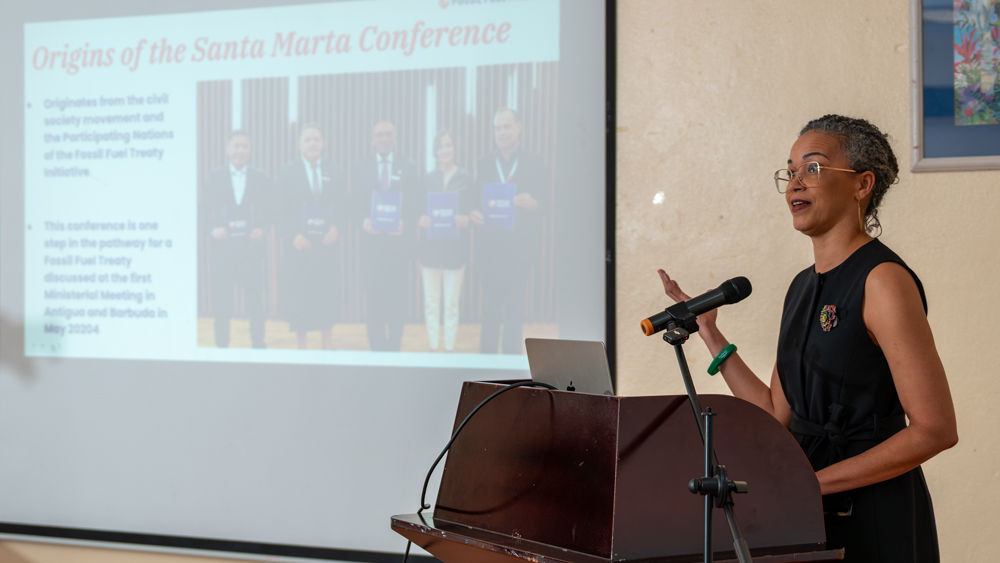
Cooper said the Fossil Fuel Treaty Initiative has been keeping expectations reasonable for the historic First Conference on Transitioning Away from Fossil Fuels, in Santa Marta, Colombia, from April 24 to 29.
“We want to see that there is a clearer pathway that would lead to launching negotiations for a treaty, which could be at a second diplomatic conference. It might take a third diplomatic conference.We’re not sure because history tells us that these things often take a couple of diplomatic spaces before that happens,” she said.
The Santa Marta conference is expected to create meaningful dialogue on how international cooperation can remove blockages to achieving greater collaboration and steps towards acknowledging the need for a global just transition. Cooper stressed the importance of a global plan to manage how countries transition away from fossil fuels to more renewable sources of energy.
A Closer Look at the Caribbean
Cooper, who was raised in Trinidad and Tobago, explained that small island developing states (SIDS) have been asked to join climate conversations given their extremely vulnerable position.
“That kind of profile of Trinidad and Tobago as a fossil fuel-dependent country, it really would be a prime candidate to be part of the Santa Marta conversations to see.”
She said that for transition discussions to be fair for fossil fuel-dependent economies, those countries need a seat at the table. She further emphasised, “A treaty such as the fossil fuel treaty really is about creating a space for countries that are climate vulnerable, but also are vulnerable because they are fiscally dependent on fossil fuels.”
There has been unanimity in the region on the need for a transition away from fossil fuels. Cooper explained that this presents an opportunity to discuss how such a transition can be achieved. However, she noted that there is still no concrete global plan outlining how this can be done.
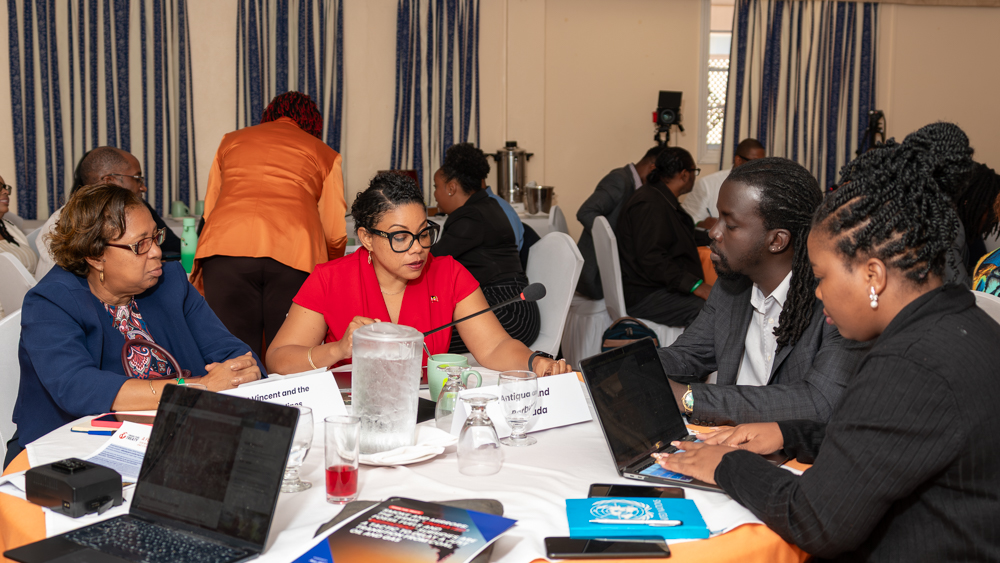
“If Trinidad is part of the decision and the discussions about how that global plan is designed, then that actually gives them the best opportunity to be able to shape how that is done in a way that will be fair,” she said.
She clarified that this requires assessing countries’ fiscal needs, which remains one of the biggest gaps at the moment.
She stated that no country can fully transition on its own. “It’s a huge task; we are all dependent as consumers as well as producers. We are dependent on fossil fuels for our economy, for our energy, which is the lifeblood of so many of our industries. Not just the fossil fuel industry itself.”
She highlighted that this requires much greater international cooperation. A global plan for countries to come together and discuss how, as an international body, they can work together in a more equitable way is essential.
“So, that we aren’t going to benefit from that, so that we aren’t going to suffer from an unmanaged decline of fossil fuels that could cause things like energy poverty, which could cause loss of financial revenues. Trinidad can be part of the solution by actually putting what their needs are on the table at this point.”
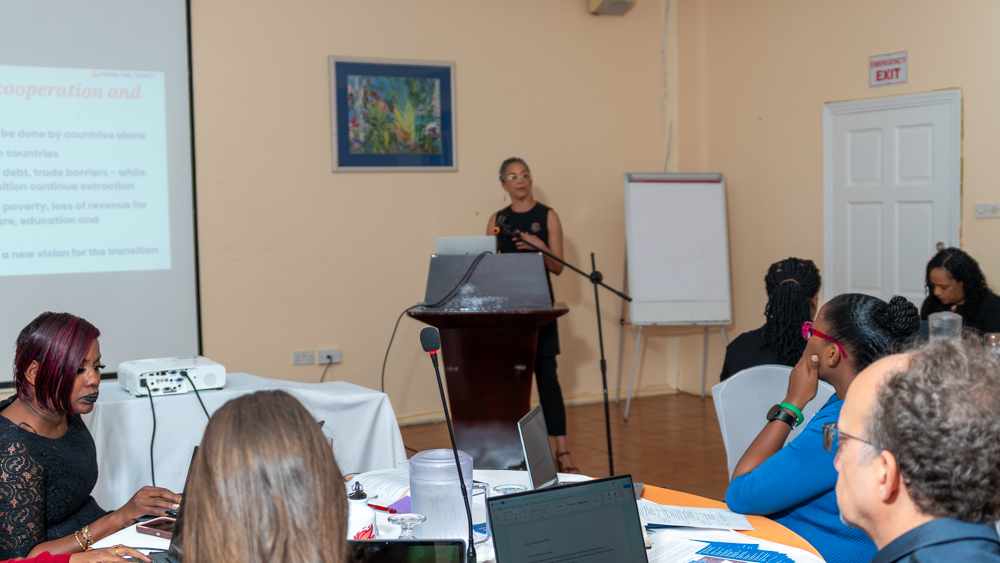
Recalling her presentation at the convening earlier this month, Cooper said she noted that the Caribbean is disproportionately and devastatingly impacted by the climate crisis. She added that the Caribbean has been leaders in the global multilateral space around climate issues.
“We were really quite crucial in the decision to come to the 1.5 temperature limit because we knew of the risks for our region. But also because we have very ambitious, passionate members of our nations and of our region that really want to see this.”
Cooper also expressed the need to ensure that transition solutions break colonial logics that still exist in decisions around energy and financing.
“They still determine that whole debt fossil fuel trap that so many of our countries are in. It’s so important for us to be at the table to really do as much as we can to raise awareness about those colonial logics in the system at the moment and be part of imagining something new about how this fossil fuel free future could look like. Because at the moment, if we’re not at the table, that imagination of what the future could be will be left to countries that have the resources to be able to be at the table. Otherwise, we’ll be left out.”
A space outside the UNFCCC
The Colombia Fossil Fuel Transition Conference is seen as an opportunity to speak extensively and exclusively about fossil fuels. At the annual Conference of Parties (COP), the topic of fossil fuels and a clear roadmap for transitioning away has not been directly addressed.
Cooper said, “It is quite historic in the sense that it is the first time that the discussion about the transition from fossil fuels to a diplomatic space has been created outside of the spaces where we have been used to normally talking about the transition. It’s creating a diplomatic space outside of the UN space.”
She explained that this allows countries to step outside of structured and rigid negotiating spaces and engage in a new diplomatic forum to advance conversations on the issue.
The conference is expected to bring together over 24 countries that signed the Belém Declaration on the Just Transition Away from Fossil Fuels, including Australia, Belgium, Chile, Denmark, Fiji, Kenya, and Pacific island nations. From the Caribbean, Antigua and Barbuda, The Bahamas, and St Kitts and Nevis are participating in the Fossil Fuel Treaty Initiative, with more nation-states encouraged to join the momentum.
Cooper said, “We hope that out of that, we will get closer towards talking about various solutions and opportunities, one of which could be something towards a more legally binding instrument, like a treaty.”