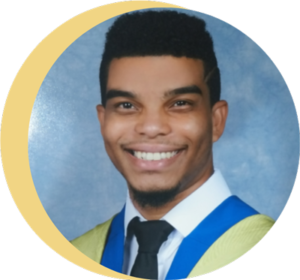
Tyrell Gittens is a geographer, environmentalist and journalist from Trinidad and Tobago. From June 16 to 18, 2026, he represented the Global Youth Biodiversity Network (GYBN) Caribbean Chapter at the 11th Our Ocean Conference in Mombasa, Kenya, with the support of the Caribbean Biodiversity Fund. Tyrell wrote this article based on activities at the conference.
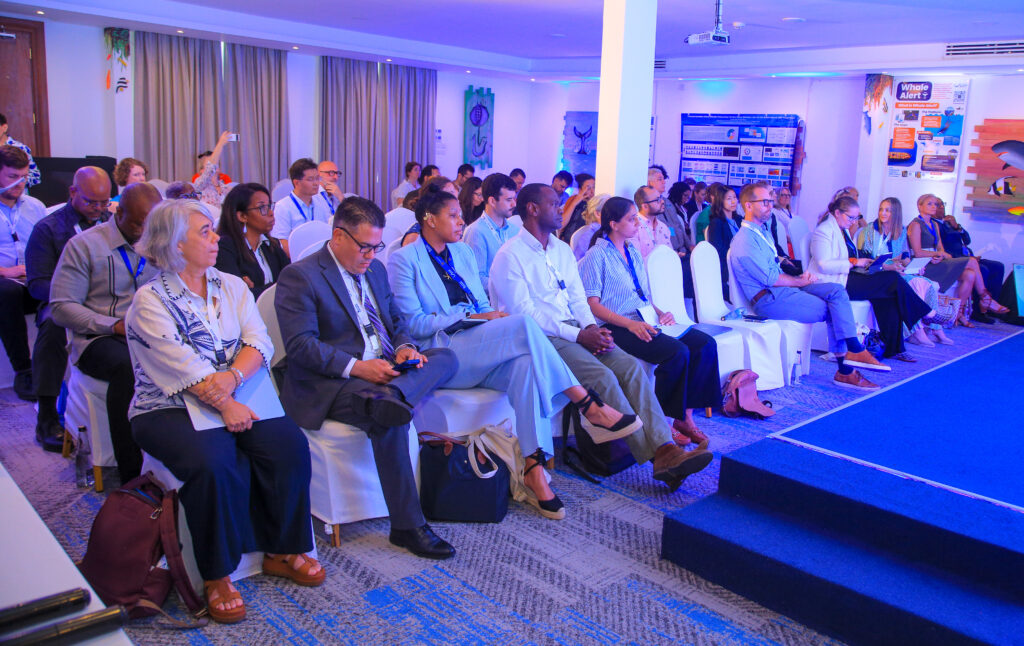
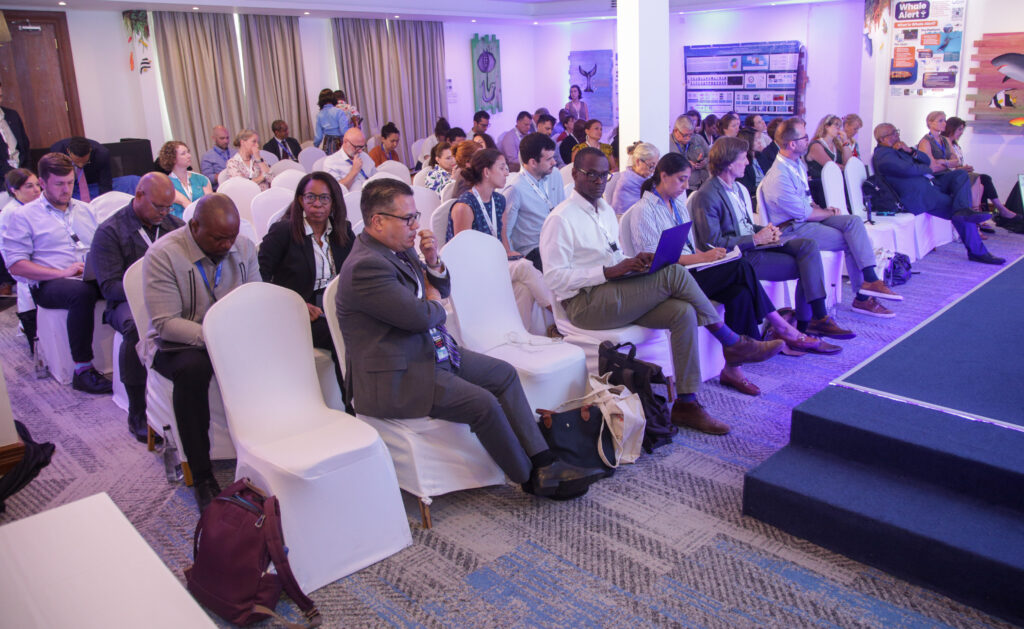
As countries work to deliver their ocean conservation commitments under the Kunming-Montreal Global Biodiversity Framework (KMGBF), regional and international leaders gathered on June 17, 2026, at the 11th Our Ocean Conference in Mombasa, Kenya, to discuss how stronger regional cooperation and sustainable financing can accelerate action.
The official side event “Raising ambition and financing in the Wider Caribbean: advancing the Wider Caribbean Ocean Coordination Mechanism and the Actioning Blue 30×30 roadmap” was co-hosted by the Governments of Jamaica, Grenada, the Dominican Republic and Costa Rica, the Caribbean Community (CARICOM) Secretariat, the Organisation of Eastern Caribbean States (OECS) Secretariat, the Wider Caribbean Ocean Coordination Mechanism, the Caribbean Biodiversity Fund, and partners.
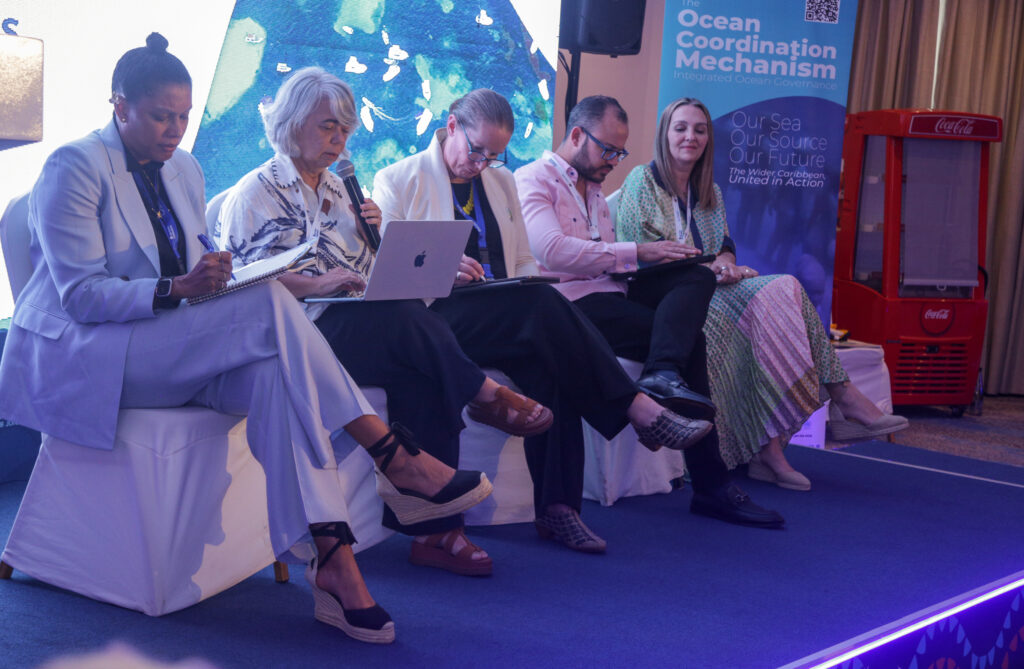
A high-levelpanel, moderated by Jamaica’s Special Envoy for Climate Change, Environment, Ocean, and Blue Economy, Ambassador Dale Webber, explored the policy, governance and financing reforms needed to help Caribbean countries achieve SDG 14 and the global target of protecting 30 percent of marine and coastal areas by 2030.
Panelists included the Hon. Matthew Samuda, Minister of Water, Environment, and Climate Change; Hon. Monica Navarro, Minister of Environment and Energy of Costa Rica; H.E. Safiya Sawney, Grenada’s Special Envoy and Ambassador for Climate; Mr. Jonathan Delance, Chief Conservation Officer for the Dominican Republic’s 30×30 Programme; Ms. Valerie Hickey, Global Director for Environment at the World Bank; and Ms. Ana Paula Prates, Director of the Department of Ocean and Coastal Management, Ministry of the Environment and Climate Change, Brazil.
Building the financial architecture for conservation
Ambassador Sawney emphasized that achieving the region’s conservation ambitions will depend on establishing long-term financing systems rather than relying on fragmented, short-term projects.
She highlighted the regional “Actioning Blue: A Caribbean 30×30 vision and roadmap for our ocean”, which aims to strengthen collaboration, mobilize finance, improve ocean health, support the blue economy, advance Sustainable Development Goal 14, and deliver Target 3 of the KMGBF.
As a practical example of this approach, Ambassador Sawney pointed to the CBF’s newly announced marine protected areas finance facility (MPAFF), describing it as a concrete step towards ensuring conservation funding reaches the marine protected areas (MPAs) where it is most needed.
“One of the key takeaways from the Caribbean Challenge Initiative was that we needed to ensure that financing not just flowed into the Caribbean but also flowed into marine protected areas.
“The Caribbean Biodiversity Fund has worked on designing a finance facility for marine protected areas. This is a really big step because we noticed that a lot of funding was flowing into the region, but it wasn’t reaching the marine protected areas.
“We needed to go back and figure out how we can redesign a platform that ensures that marine protected areas have the financing that they need.”
The Ambassador went on to share that the facility could also encourage governments to co-invest alongside development partners and the private sector, creating more diverse and reliable sources of funding for protected area management.
She added that discussions are already underway to explore how the facility could support implementation of the OECS’ 30×30 Transformation Program.
Through its Council of Ministers of Environmental Sustainability (COM:ES), the OECS and its 13 member states are advancing a unified approach to meet the KMGBF by strengthening ecosystem protection, climate resilience, and sustainable economic development.
“We’ve identified partners that have experience in blended finance at the multilateral level, who can help us move beyond concepts and identify practical catalytic financing mechanisms that de-risk public investment” Sawney explained.
“We’re beginning to build a roadmap, using the tOECS 30×30 transformation programme as a potential demonstration model for the wider Caribbean.”
Conservation requires political and financial alignment
Jonathan Delance stressed that ambitious conservation goals must be matched by equally ambitious financial planning.
While encouraging countries to continue identifying their priority conservation needs and financing gaps, he highlighted Costa Rica as an example of how political commitment can translate into meaningful conservation outcomes.
Delance argued that Ministries of Finance must become active partners in achieving biodiversity targets, rather than leaving environmental policy solely to Ministries of Environment.
“The Ministry of Environment will likely sign all the environmental agreements, but we also need the people who make the budget in countries on board” he said..
“We need to speak the language as the Ministry of Finance.
“They make the decisions about national priorities, and they need to understand that investing in ocean conservation is an investment in people’s wellbeing and economic future.”
Putting nature into national accounts
Valerie Hickey encouraged governments to view conservation as a long-term investment rather than a short-term project.
“We need to think about running a marathon, not a sprint,” she said.
Hickey argued that countries must begin incorporating natural capital into their national accounting systems so that ecosystems are properly reflected in economic decision-making. She explained that traditional national accounts measure economic activity but often fail to capture the value of natural assets that underpin sectors such as fisheries, tourism and coastal protection.
“The problem we have today is that the System of National Accounts in too many countries, except for countries like Costa Rica, doesn’t take into account natural capital,” Hickey said.
Integrating natural capital accounting, she explained, would allow governments to better understand the economic contribution of healthy ecosystems, strengthen the case for conservation investment, and help finance implementation of the 30×30 target and broader blue economy strategies. Hickey emphasized that these efforts should follow internationally recognized standards.
“Natural capital accounting cannot sit outside the System of National Accounts as a separate project,” she said.
“It has to be integrated into the existing decision-making system, using the UN System of Environmental Economic Accounting so countries can produce compárable and credible data.”
Advancing regional ocean governance
The event concluded with another milestone for regional cooperation as the Governments of Jamaica and Barbados signed the Wider Caribbean Ocean Coordination Mechanism.
The Ocean Coordination Mechanism provides a permanent regional governance platform that enables countries and partners to align action, share knowledge and coordinate investments to maximize the impact of limited resources.
By becoming signatories, Jamaica and Barbados committed to strengthening marine protection and advancing their national ocean commitments through coordinated regional action..