We are Power Rangers – more specifically, the Overshoot Power Rangers.
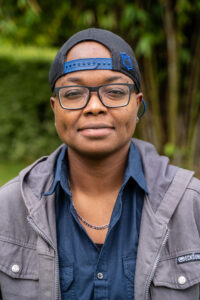
I am the Green Power Ranger, representing the Youth Engagement Group to the Climate Overshoot Commission. My fellow rangers include:
- Red (he/him) – the leader, who speaks like a British bloke with a PhD from the University of Oxford (I only note this because sometimes he had to be the interpreter between the Youth Group and the Commissioners – though we all speak English, if you know what I mean).
- Black (he/him) – the annoying younger “brother”, a PhD candidate in Social Innovation and Sustainability from Sierra Leone.
- Pink (she/her) – a Filipina cocoa farmer whose work has landed her on influential lists.
- Yellow (she/her) – quiet, brilliant, and educated at one of Germany’s top schools for climate studies, originally from Hong Kong.
- Blue (he/him) – always dressed to impress, a Mauritian islander and UNICEF advisor.
- Myself, Green (they/them) – late to the game, a climate advocate from Trinidad and Tobago.
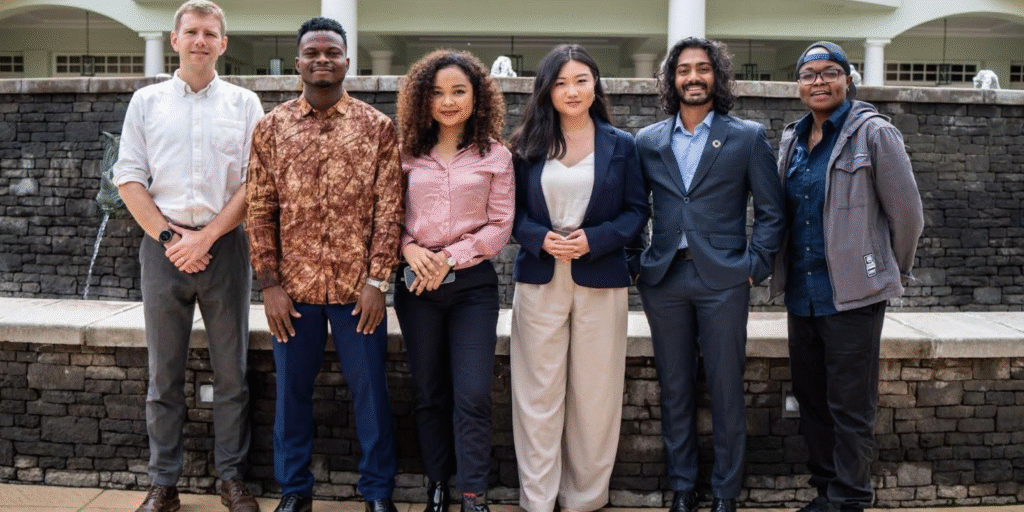
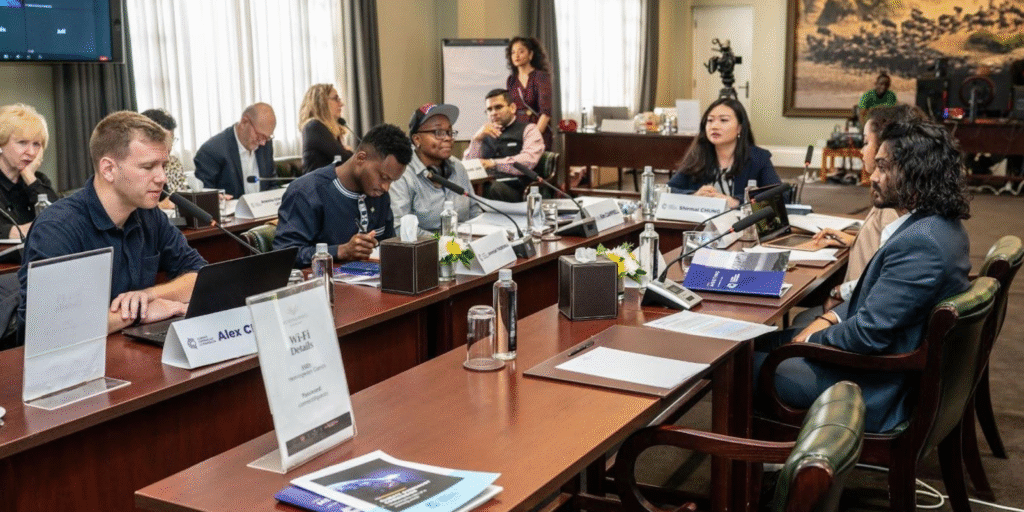
Together, we were recruited to serve as youth voices raising the perspectives of underrepresented communities in discussions on climate overshoot – hence the name Overshoot Power Rangers.
Speaking truth to power
Throughout 2023, our youth group submitted two major pieces of writing to the Commission.
The first was a letter from the eight initial youth members, addressing the lack of accessible participation in meetings and what we felt was the tokenisation of youth engagement. The response was carefully worded and required mediation, but ultimately, clearer terms of engagement were agreed upon before we moved forward with our policy recommendations.
A larger consequence of the letter was the risk of cancelling a USD 500,000 grant after a potential funder, focused on youth advocacy, gained access to it.
The second submission was our policy recommendations, developed before the commissioners released the official Climate Overshoot Commission report.
But this raised a difficult question: What should six youth advisors say to former prime ministers, ministers, presidents, academics, and global leaders about how to tackle the greatest climate crisis humanity has ever faced?
This is where the Power Rangers analogy becomes real. We were expected to represent a generation that will bear the consequences of a crisis we did not create.
Understanding climate overshoot
Climate overshoot refers to the moment when global average temperatures exceed the 1.5 °C target established under the Paris Agreement, often summarised by the slogan “1.5 to stay alive,” which has been championed by small island states since 2008.
The 1.5 °C threshold is calculated over several years, not a single event. However, in 2024, global temperatures began breaching historical averages, and 2025 is on track to continue that trend.
Overshoot raises urgent questions about how humanity might respond. Some researchers are now exploring geoengineering – technological interventions designed to cool the planet artificially. But these ideas carry enormous uncertainty and risk.
Solar geoengineering: science fiction or real policy?
As youth advisors, we participated in briefings with experts on solar radiation modification (SRM) and carbon dioxide removal (CDR).
Geoengineering can feel like something out of a movie: the moment when scientists resort to extreme interventions because humanity failed to act in time.
One example is SRM, which proposes to recreate the cooling effect of volcanic eruptions by injecting reflective particles into the atmosphere.
But this is no longer science fiction. Experimental research is already taking place, and some scientists are now advocating for larger outdoor experiments.
The possible outcomes are stark:
- Best case: SRM provides only a small amount of cooling, temporarily slowing warming.
- Worst case, SRM could trigger unintended global impacts, disproportionately harming vulnerable communities in the Global South.
For communities in the Caribbean, Africa, and the Pacific – already on the front lines of climate change – these risks raise serious environmental justice concerns.
A youth call for precaution
After months of consultations, modelling sessions, and discussions with scientists, the Youth Group called for a moratorium on solar geoengineering research and deployment, similar to the one currently debated for deep-sea mining.
Our recommendations emphasised two key principles:
- Mitigation must remain the priority – reducing greenhouse gas emissions at the source.
- The precautionary principle must guide decisions about emerging technologies with uncertain global impacts.
Many of the model simulations presented to us suggested that negative impacts would fall disproportionately in the southern hemisphere. Countries such as Trinidad and Tobago may fall within a “buffer zone,” experiencing impacts but not as severely as countries further south.
Still, the implications remain deeply concerning for vulnerable communities across the Global South.
Global politics and geoengineering
In 2024, discussions about solar geoengineering reached the United Nations Environment Assembly. After strong pushback from several African countries and Pacific Island states, the proposal to establish an expert group on solar geoengineering was rejected.
Much of the resistance came from concerns that Global North institutions heavily dominate research and decision-making, while the potential impacts would be felt most strongly elsewhere.
For many critics, this dynamic raises uncomfortable questions about power, equity, and whose futures are at risk.
As a member of the Alliance of Small Island States (AOSIS), the Caribbean shares many of the same vulnerabilities as Pacific Island nations; however, Caribbean countries often face challenges in organising regional positions due to limited resources and capacity.
As small island developing states, we are frequently described as “canaries in the coal mine of the climate crisis.”
Why this matters for the Caribbean
Now discussions are expanding into marine geoengineering, and some private companies are attempting to monetise these technologies as climate solutions. At the same time, there is growing concern about the misrepresentation of Global South voices in conversations about geoengineering.
For Caribbean communities, these debates are not abstract. They raise fundamental questions about environmental rights, climate justice, and who gets to decide the planet’s future.
Organisations across the region are actively working to ensure that environmental governance reflects the voices of communities most affected by climate change, particularly young people.
One step forward would be developing a clear Caribbean regional stance on geoengineering. Expanding youth advisory participation could help bridge technological knowledge gaps and strengthen intergenerational equity in climate decision-making.
The fight for real climate action
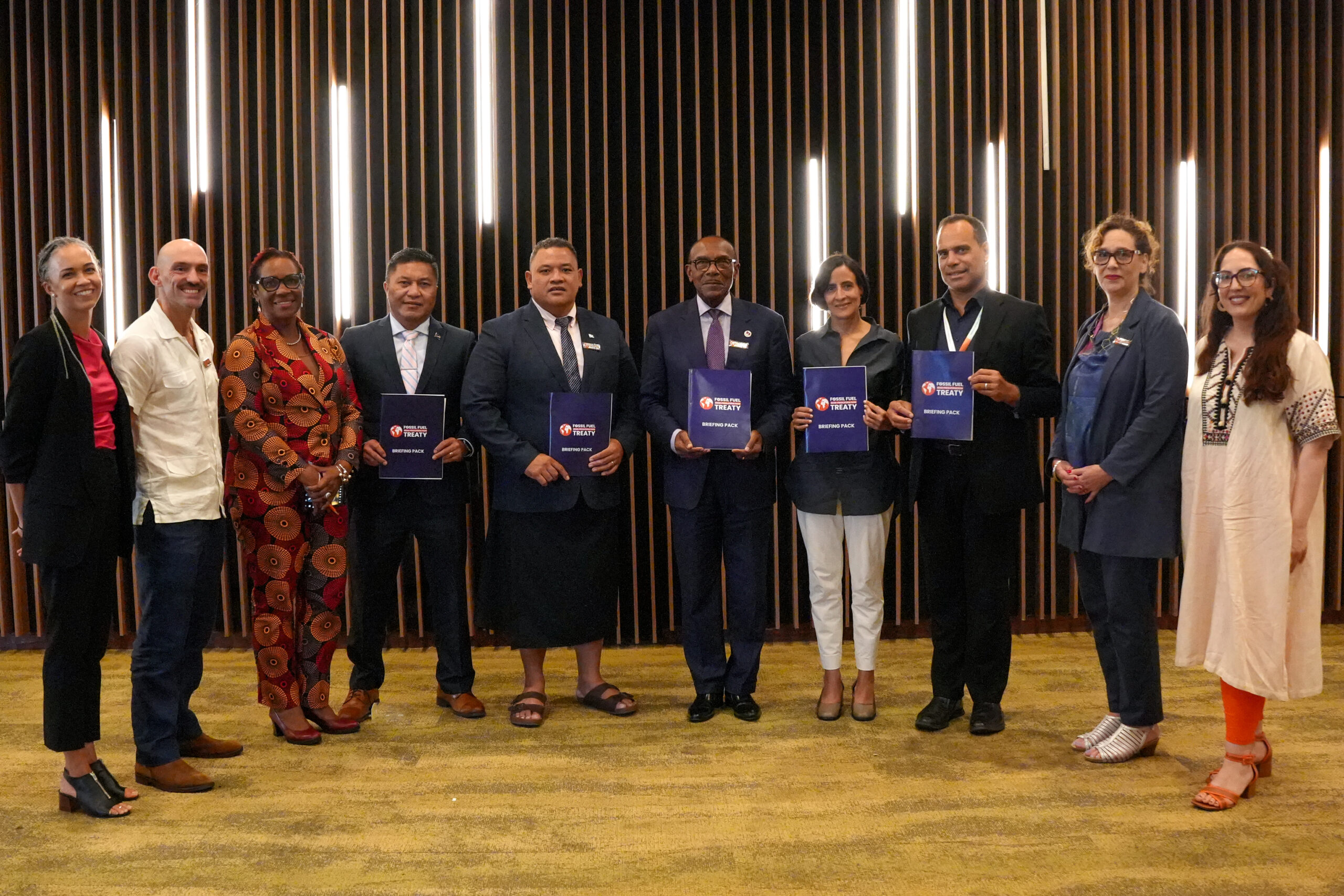
Despite growing conversations about technological interventions, many climate negotiations still struggle to address the root cause of the crisis: fossil fuels.
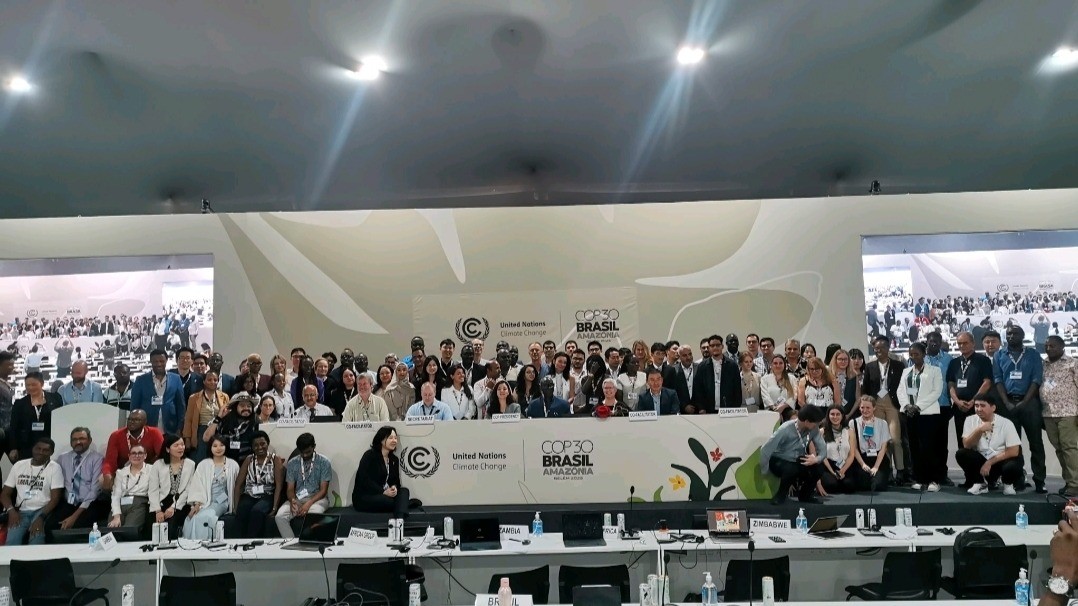
Even at COP30, progress was uneven. Some developments offered glimmers of hope, including advocacy from the Women and Gender Constituency and the adoption of the Belem Antalya Mechanism, as well as new references to care work in climate frameworks.
Yet fossil fuels – the primary driver of climate change – were barely mentioned.
How can we mitigate emissions without addressing their primary source?
How can we claim to solve the climate crisis while ignoring its root cause?
And how do we navigate a world that may temporarily exceed 1.5 °C?
That may be where the Overshoot Power Rangers come in after all.